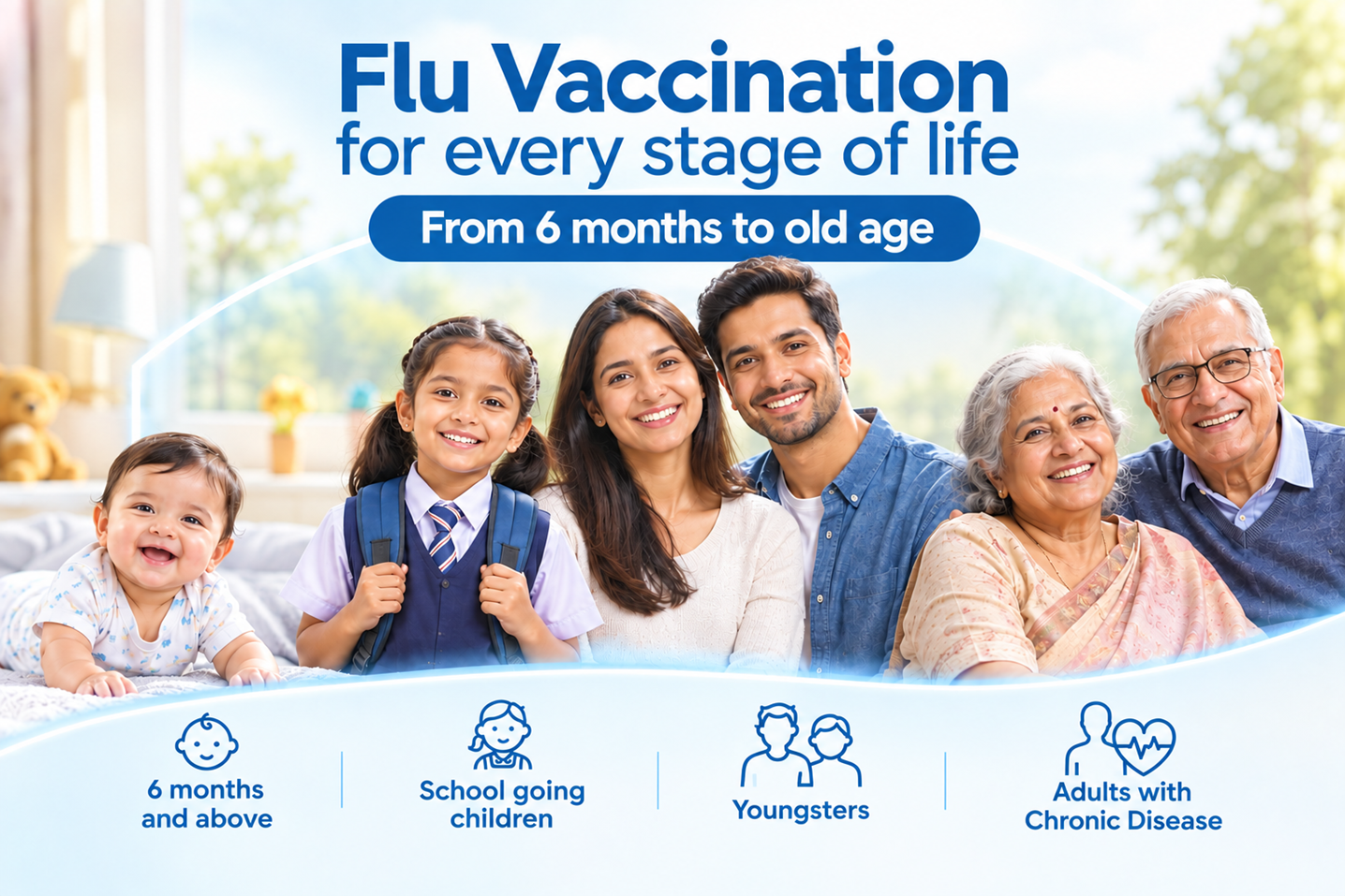
IMA declares Indian Immunization week from 21st September to 27th September
Why IMA is introducing this
Closing the gap in influenza vaccination
Influenza remains a significant public health burden in India, driving avoidable hospitalizations and complications across all age groups. Vaccine uptake stays suboptimal even though annual vaccination is well established — largely because vaccination is routinely deferred during episodes of acute febrile illness, and many patients never return once they recover.
Vaccination is often postponed for fever or acute illness, with no clear guidance on how long to wait.
Without a defined deferral period, patients frequently miss their annual protection altogether.
IMA has developed recommendations to guide physicians on the optimal timing of vaccination after acute febrile illness.
The goal: fewer unnecessary deferrals, more consistent clinical practice, and greater physician confidence in vaccinating eligible individuals at the earliest safe opportunity.
Respiratory infections rise sharply throughout the year — making timely flu vaccination awareness important among both HCPs and the public.
IMA declares 21st September – 27th September as Indian Immunization Week.
Guidelines & national rollout
Guidelines: Influenza Vaccination following Acute Febrile Illness
Developed by IMA's editorial board and disseminated nationwide through Indian Immunization Week.
Indian Immunization Week Activations
Taking the guidelines from page to practice
1
Radio awareness
Radio programs amplify public awareness of influenza vaccination and Indian Immunization Week across 5 cities.
2
Media outreach
A press note cascades the awareness message to a wider public audience nationwide.
3
CME programs
Continuing Medical Education sessions run in Ahmedabad, Chennai, Kolkata & Mumbai on influenza vaccination.
4
In-clinic dissemination
Guideline hardcopies reach HCPs in clinic, driving awareness on vaccination following acute febrile illness.
10,000+ HCPs reached pan-India
5 cities · Radio, 7x/day
4 CME cities
Flu vaccination awareness
Immunization matters — at every age
Choose an audience to see why annual influenza vaccination matters for them.
Protecting children when they are most vulnerable
01
Protects against severe influenza
Lowers the risk of influenza-related hospitalization, complications, and severe disease, especially in children under 5.
02
Reduces school absenteeism
Preventing influenza illness means fewer missed school days and less disruption to learning and daily life.
03
Keeps pace with changing viruses
Annual vaccination matters because circulating influenza strains shift from season to season.
04
Protects families and communities
Vaccinated children are less likely to spread influenza at home, at school, and in the community.
05
Eases the burden on healthcare systems
Higher coverage in children can reduce influenza-related visits, hospitalizations, and outbreaks.
Protecting adults when they are most vulnerable
01
Protects high-risk individuals
Older adults and those with chronic conditions face a higher risk of severe influenza and hospitalization.
02
Protects during pregnancy
Vaccination protects pregnant women and offers passive protection to infants in their first months of life.
03
Protects productivity
Reduces influenza-related illness, absenteeism, and disruption to work and daily activities.
04
Immunity wanes, strains evolve
Annual vaccination matters because protection declines over time and circulating viruses keep changing.
05
Supports healthy ageing
Annual influenza vaccination is a key part of preventive healthcare in older adults.
Indian Immunization Week · 21–27 September
Take the IMA Vaccination Pledge
Recognise. Re-assess. Vaccinate.
On this important occasion, commit to closing the gap in influenza vaccination:
Recognize every appropriate opportunity for vaccination.
Avoid unnecessary deferral of influenza vaccine following acute febrile illness, and re-assess patients on recovery.
Together, let's close the gap in influenza vaccination.
I Pledge to Protect & Vaccinate
Information to be captured
Flu Vaccination Awareness, Indian Immunization Week · Content based on IMA Recommendations on Influenza Vaccination following Acute Febrile Illness.
References
1. World Health Organization. Vaccines against influenza: WHO position paper. Wkly Epidemiol Rec. 2022;97(19):185-208.
2. American Academy of Pediatrics. Recommendations for Prevention and Control of Influenza in Children, 2024-2025. Pediatrics. 2024;154(4):e2024068507.Principi N, Esposito S. Prevention of influenza in healthy children. Expert Rev Vaccines. 2016;15(12):1571-1582.Grohskopf LA, Blanton LH, Ferdinands JM, Chung JR, Broder KR, Talbot HK, et al.
3. Prevention and Control of Seasonal Influenza with Vaccines: Recommendations of the ACIP. MMWR Recomm Rep. 2024;73(5):1-30.Centers for Disease Control and Prevention. Benefits of Flu Vaccination. Atlanta, GA: CDC; 2024.Nichol KL. The efficacy, effectiveness and cost-effectiveness of inactivated influenza virus vaccines. Vaccine. 2003;21(16):1769-1775.
4. European Centre for Disease Prevention and Control. Factsheet about seasonal influenza in older adults. Stockholm: ECDC; 2024.Nunes MC, Madhi SA. Influenza vaccination during pregnancy for prevention of influenza-confirmed illness in infants. Hum Vaccin Immunother. 2018;14(3):758-766